22 AMAZINGLY EXOTIC BIRDS THAT SEEM HEAVEN SENT
Every species is naturally blessed with a certain tint and physical appearance that distinguishes them from another, with our two-winged and two-legged friends here it is no exception. The Earth is filled with thousands of thousands species of exotic birds and nearly every city or town you’re a lot likely to see a bird. In that case, we have collected data for 22 amazingly exotic birds that seem heaven sent. I hope you enjoy browsing them.
- HYACINTH MACAW
Latin name: Anodorhnchus hyacinthinus
Size: 100 cm
Diet: Seeds, nuts and fruits
Habitat: Savanna grasslands
Threats: Loss of habitat, illegal hunting
Nativity: Brazil, Bolivia and Paraguay
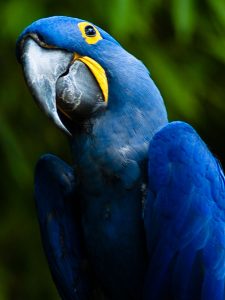
They are stunning with blue colour with vivid yellow rings around the eyes and corners of the beak. The prettiest of all birds that I admire are the macaw, just after watching the animation film Rio, I guess. The Hyacinth macaw is a large macaw species, native to Central and Eastern South America. It is the largest macaw and the largest of all flying parrot species in the world, measuring up to 100 cm in length. It inhabits semi-open areas and savanna grasslands in Northern Brazil.
- GOLDEN PHEASANT

Latin name: Chrysolophus pictus
Size: 90 – 105 cm (35 – 41 inches)
Diet: Grains, leaves and invertebrates
Habitat: Mountainous forest areas
Threats: Illegal hunting
Nativity: China, USA, Canada, Mexico, England, France, Belgium, Netherlands, Australia, Bolivia, Colombia, Peru, Bolivia, Chile, Argentina and Uruguay
The golden pheasant is native to the mountainous forest areas of western China, although it can also be found in many regions in Europe, North and South America. Its unmistakable for its golden crest and rump and bright red body. Males have a multi-colourful plumage, with golden-yellow crest with a hint of red at the tip. The males are brighter and colourful compared to females. While they can fly clumsily in short bursts, they prefer to run and spend most of their time on the ground. They feed on the ground on grains, leaves and invertebrates, and then roost in trees at night.
- Books: Game Birds
- BLUE BIRD OF PARADISE

Latin name: Paradisornis rudolphi
Size: 30 cm
Diet: Fruits, insects
Habitat: Highlands and mountainous regions
Threats: Habitat loss, illegal hunting
Nativity: New Guinea
This exotic bird is found in the forests of New Guinea. This is a beautiful, relatively large species of bird of paradise. It is the only species in the genus Paradisornis, it is definitely one of the most fabulous and extravagant of all birds of the world, with its glorified and fancy and flank feathers present only in males and also their two long wires also found only in the males. Their generic name Paradisornis which means paradise bird referring to the birds’ exoticness altogether, their appearance and habitat. The blue bird is among the larger birds of paradise, being around 30cm. It is mainly a frugivorous species, feeding on a good variety of fruits like figs, drupes and berries, but animal prey is also present in its diet; which includes insects.
- RESPLENDENT QUETZAL

Latin name: Pharomachrus mocinno
Size: 36 – 40 cm (14 – 16 inches)
Diet: Fruits, insects, frogs and lizards
Habitat: Tropical forests
Threats: Loss of habitat, illegal hunting
Nativity: Guatemala, Mexico, Panama
The quetzal is one among the world’s most beautiful birds. This vibrantly coloured bird is mostly found in the mountainous, tropical forests of Central America. There are two sub-species of the quetzal both of which are found throughout Mexico to Western Panama. With it’s remarkable beauty it is honoured as the national bird of Guatemala and its image is found on the country’s flag and coat of arms. It also lends its name to the country’s currency, the Guatemalan quetzal.
However being the symbol of Guatemala, the quetzal is highly threatened in that region where they are trapped for captivity and gradual disappearance of their tropical homes. The bird’s main diet includes fruits, insects, lizards, and other small creatures. History and folklore has it that the bird was once sacred to the ancient Maya and Aztec people, and royals and priests wore its feathers during ceremonies.
Did You Know?
During mating season, male quetzals grow twin tail feathers that form an amazing train up to one metre long.
- RAGGIANA BIRD OF PARADISE

Latin name: Paradisaea raggiana
Size: 34 cm
Diet: Fruits, berries, lizards
Habitat: Mountainous forests
Threats: Illegal hunting
Nativity: New Guinea
Well, birds-of-paradise, as beautiful as they are, the Raggiana Bird-of-paradise is considered by many to be the most beautiful bird species on the planet. Found in Southern and North Eastern New Guinea where it is also the national bird of this country, most often you’ll find this bird on money and stamps. Historically they have been hunted for centuries for their beautiful plumage which have been used for decoration. The males of this bird species are very vibrant and colourful, with wide variation in the colours of feathers from breasts to tail feathers compared to the females who have less colourful plumage, which are mostly brown in colour, and this helps them avoid predators while raising their young ones. These birds mainly eat fruits and berries while in some other occasions they would eat small animals such as lizards.
Did You Know?
The males are known to gather in a specific tree together in the morning to engage in mutual display, where they fluff out their extensive colourful feathers to attract a female.
- DUSK LORY
</a> / <a href="https://creativecommons.org/licenses/by-sa/3.0">CC BY-SA</a>)
Latin name: Pseudeos fuscata
Size: 25 cm (10 inches)
Diet: Fruits, insects
Habitat: Subtropical and tropical mangrove forests
Threats: Natural predators, illegal hunting
Nativity: New Guinea, Indonesia and Papua New Guinea
This is another species of parrot found in New Guinea, it has a length of about 25 cm (10 inches). It has an amazing set of colours mainly brown with a whitish back and rump, and across it’s upper chest and abdomen its either yellow or orange. It is also native to Indonesia. It’s natural habitats are subtropical and tropical mangrove forests.
- BROAD-BILLED HUMMINGBIRD

Latin name: Cyanthus latirostris
Size: 10 cm
Diet: Nectar, insects
Habitat: Arid scrubs
Threats: Natural predators
Nativity: USA, Mexico
The broad-billed hummingbird ss a medium-sized hummingbird native to North America, with an average length of 10 cm. It is metallic green on it’s upperparts and breasts with an undertail that is mostly white and the tail is darkly coloured. It’s diet mainly consists of nectar from flowering plants, an adaptation from it’s beak
- KEEL-BILLED TOUCAN

Latin name: Ramphastos sulphuratus
Size: 50 cm (20 inches)
Diet: Fruits, insects, reptiles
Habitat: Tropical, sub-tropical and lowland rainforests
Threats: Hunting
Nativity: Belize, Mexico, Guatemala, Venezuela and Colombia
The keel-billed toucan is a large bird with a length of approximately 50 cm (20 inches). Their diet primarily consists of fruits and occasionally feed on insects, reptiles and other birds.
When toucans sleep, they turn their heads behind so that their long big beak rests on their back and their tail is folded over their head. It is the national bird of Belize. In their native regions they are sometimes associated with evil spirits and are thought to be incarnations of demons.
-
RAINBOW LORIKEET

Latin name: Trichoglossus moluccanus
Size: 25 – 30 cm (10 – 12 inches)
Diet: Fruit, pollen, nectar
Habitat: Rainforests, coastal bushes, woodland areas
Threats: Parasites
Nativity: Australia, New Guinea, Solomon islands, Vanuatu, New Caledonia, Indonesia
The rainbow lorikeet is a mid-sized parrot, measuring 25 to 30 cm long with wingspan of 17 cm. They are known for there bright red beak and colourful plumage, blue head, green tail and wings. They are native to Australia but can also be found in eastern Indonesia, western New Guinea and Solomon islands. There most preferred habitats are rainforests, coastal bushes and woodland areas, they can also be found in well-treed urban areas. They are notorious for destroying fruit crops, however their diet is mainly nectar and pollen from flowers. Pet owners have found these birds really demanding and attention-seeking. Like all other parrots, these are extremely playful.
- HORNED SUNGEM

Latin name: Heliactin bilophus
Diet: Fruits, insects, nectar
Habitat: Savannas
Threats: Illegal hunting, natural predators
Nativity: Brazil, Bolivia
The horned sungem is a South American hummingbird and the only species of the genus Heliactin. It is native to Brazil and Bolivia. It’s habit include dry open or semi-open regions such as savannas. Its main diet is nectar from flowering bushes and trees like Stachytarpheta, Lantana and Citrus.
- NICOBAR PIGEON

Latin name: Caloenas nicobarica
Size: 40 cm (16 inches)
Diet: Seeds, fruits and buds
Habitat: Dense forests
Threats: Illegal hunting, loss of habitat, natural predators
Nativity: India, Myanmar, Thailand, Malaysia, Philippines Cambodia and Vietnam
The Nicobar pigeon is a large pigeon with an average length of 40 cm (16 inches). This pigeon is mostly found on small islands and coastal regions of Andaman and Nicobar islands in India. Some experts believe this may be the closest relative of the extinct Dodo. Its diet mainly consists of seeds, fruits and buds
- GOULDIAN FINCH
</a> / <a href="https://creativecommons.org/licenses/by-sa/3.0">CC BY-SA</a>)
Latin name: Erythrura gouldiae
Size: 125 – 140 mm long
Diet: Grass seeds, insects
Habitat: Mangrove forests and savannas
Threats: Habitat loss, air sac mite (parasite), natural predators
Nativity: Australia, USA
Is a grassfinch species native to Australia, where it inhabits the edges of mangroves and thickets and savannas dotted with trees. Because of its brilliant colours the gouldian finch is very popular as a pet. The gouldian finch diet entirely consists of grass seeds and insects. Just like most exotic birds, males are more brightly coloured than females.
- VICTORIA CROWNED PIGEON

Latin name: Goura victoria
Size: 73 – 75 cm (29 – 30 inches)
Diet: Fruits, seeds, invertebrates
Habitat: Lowlands and swamp forests
Threats: Habitat loss, illegal hunting
Nativity: New Guinea
The Victoria Crowned Pigeon is a large bluish-grey pigeon with elegant blue lace-like crests, maroon breast and red irises. It is native to the lowlands and swamp forests of New Guinea and surrounding islands. They can grow up to the size of turkey although they weigh much less. Their diet mainly consists of fruits and seeds, occasionally eats invertebrates.
Did You Know?
Victoria crowned pigeons are one of the few bird species that have the unusual ability to produce ‘milk’. Both the male and female can produce crop milk and this forms the complete diet of the nestlings during their first few days of life.
- GUINEA TURACO

Latin name: Turaco persa
Size: 40 – 75 cm (16 – 30 inches)
Diet: Fruit, flowers, leaves, termites, seed pods, acacia, figs, and snails.
Habitat: Forests, woodlands and savannas
Threats: Illegal hunting
Nativity: New Guinea
The Guinea turaco is a medium-sized, green bird that is most common in forests and savanna areas of Western and Central Africa, it is so common that they are considered as pest due to their destructive feeding habit, however, in some way they are helpful in seed dispersal. This bird is popular with it’s attractive look; a long tail, a tall crest, red eyes and a red beak, an interesting fact about this bird is that it’s crest can stand up to 5 cm (2 inches) tall when excited.
Turacos are the only birds to possess true red and green colour. The turaco’s red pigment (turacin) and green pigment (turacoverdin) both contain copper. In museum species, the pigments deepen with age because the copper begins to oxidize. When you look at most birds, the colour you are seeing is a reflection produced by the feather structure.
Did You Know?
If you stirred a glass of water with a red turaco feather, the water would turn pink!
- MARVELLOUS SPATULETAIL
.jpg" title="via Wikimedia Commons">John Gould</a> / Public domain)
Latin name: Loddigesia mirabilis
Size: 10 – 15 cm
Diet: Nectar, Insects
Habitat: Humid forest edges, montane scrubs
Threats: Illegal hunting, habitat loss
Nativity: Peru
The Marvellous Spatuletail is one of the world’s rarest hummingbird that only occurs in the remote Utcubamba Valley in northern Peru. It is a unique bird with just four feathers in its tail. Its most remarkable feature is the male’s two long racquet-shaped outer tail feathers that cross each other and end in large violet-blue discs or spatules. The male can move them independently.
Locals also capture males specifically for their attractive tail feathers and for food and folk medicine since their dried hearts are said to have aphrodisiac properties. The Marvellous Spatuletails primarily feed on nectar from a variety of brightly coloured, scented small flowers of trees, herbs, shrubs and epiphytes. They also take some small spiders and insects.
Did You Know?
The marvellous spatuletail use their long, extendible, straw-like tongues to retrieve the nectar while hovering with their tails cocked upward as they are licking at the nectar up to 13 times per second.
- ORIENTAL DWARF KINGFISHER
.jpg" title="via Wikimedia Commons">Dr. Raju Kasambe</a> / <a href="https://creativecommons.org/licenses/by-sa/4.0">CC BY-SA</a>)
Latin name: Ceyx erithaca
Size: 13 – 14 cm (5 – 5.5 inches)
Diet: Insects, small reptiles
Habitat:Small streams in densely shade forests and Lowland forests
Threats: Habitat loss
Nativity: China, India, Bangladesh, Bhutan, Brunei, Cambodia, Indonesia, Laos, Malaysia, Myanmar, Singapore, Sri Lanka, Thailand, and Vietnam.
The Oriental Dwarf Kingfisher is the most brightly coloured and the smallest of all kingfisher species, measuring only between 5 – 5.5 inches (13 – 14 cm) in length – including bill its and tail. The largest kingfisher is the Giant Kingfisher (Megaceryle maxima) with an average length is 18 inches (45 cm).
The Oriental Dwarf Kingfisher’s territory encompasses a huge geographical area. Its preferred habitat includes areas that include small streams in densely shaded, lowland forests. It is endemic across much of Southeast Asia, in China and India, and It can also be found in Bangladesh, Bhutan, Brunei and Vietnam. Unlike any other kingfisher species the Oriental Dwarf Kingfisher’s diet is mainly insects, small lizards or frogs at times instead of fish. Sometimes Kingfishers would dive into the water to bathe, then fly to a perch to preen and dry their feathers in the sunlight, or use their wings to clean their heads.
In Borneo, spotting an Oriental Dwarf Kingfisher is considered a bad omen by warriors of the Dusun tribe.
- HIMALAYAN MONAL

Latin name: Lophophorus impejanus
Size: 70 cm (28 inches)
Diet: Plant matter, insects
Habitat: Temperate oak-conifer forests, open grassy slopes
Threats: Poaching
Nativity: India, China, Afghanistan, Nepal, Bhutan, Tibet and Pakistan
The Himalayan monal is a relatively large-sized bird averaging 70 cm (28 inches) in length, they are native to the Himalayas in India, eastern Afghanistan to western China. They can also be found in Nepal, Bhutan, Southern Tibet and Pakistan.
The Himalayan Monal is one amongst the most beautiful pheasants due to their exoticness and striking metallic-coloured plumage, whereas, females tend to be slightly smaller and lighter.
The Himalayan Monal mostly prefers cool upper temperate oak-conifer forests interspersed with open grassy slopes, cliffs and alpine meadows. Most often they exhibit clear and fluctuating altitudinal migration moving down as low as 6,500 feet in winter and up to 16,000 feet in the summer. Based on the Himalayan Monal pheasant’s strong association with local folklore, the pheasant has been honoured as the national bird of Nepal and the state bird of Uttaranchal and Himachal Pradesh in India.
Did You Know?
This pheasant’s scientific name was named after Lady Mary Impey, wife of British chief justice of Bengal, Sir Elijah Impey, she used to keep these pheasants in captivity.
- SECRETARY BIRD
.jpeg" title="via Wikimedia Commons">Christo Kruger</a> / <a href="https://creativecommons.org/licenses/by/3.0">CC BY</a>)
Latin name: Sagittarius serpentarius
Size: 90 to 137 cm (35 to 54 inches) height
Diet: Insects, mammals, reptiles
Habitat: Open grasslands, savannas, semi-deserts, shrublands
Threats: Loss of habitat
Nativity: Sudan, South Africa, Somalia, Namibia
The secretary bird is a very large, mostly terrestrial bird of prey, mainly found in Sub-Saharan Africa. Secretary birds prefer open grasslands and savannas, although they also live in semi-deserts and lightly wooded or scrub areas. It is instantly recognizable as a very large bird with an eagle-like body on crane-like legs, it is the only bird of prey with the longest legs. While flying, their long legs trail behind them in the air and from a distance it resembles a crane other than a bird of prey.
The Secretary bird stands at a height of 90 to 137 cm (35 to 54 inches) and weighs between 2.3 to 5 kg, with a wingspan from 191 to 220 cm (75 to 87 in)
The Secretary Bird has a wide variety of diet which consist of insects, mammals ranging in size from mice to hares and mongoose, crabs, scorpions, lizards, snakes, tortoises, young birds, bird eggs, and sometimes dead animals killed in grass or bush fires.
While the origin of the name secretary bird is not yet known, there are several theories about it. One theory suggests that the feathers jutting out behind the bird’s head reminded 19th-century Europeans of the quill pens that secretaries tucked behind their ears, while its grey and black body was reminiscent of their tailcoats.
Another theory suggests that the name derives from the Arabic words “saqr-et-tair”, or “hawk of the semi-desert”. This is more close to the bird’s taxonomic name, Sagittarius serpentarius, which means “the archer of snakes.” An attribute to its famous snake-hunting abilities.
- KING OF SAXONY BIRD OF PARADISE

Latin name: Pteridophora alberti
Size: 22 cm
Diet: Fruits, berries and arthropods
Habitat: Montane forests
Threats: Illegal hunting
Nativity: New Guinea, Papua New Guinea
The King of Saxony bird-of-paradise is an exotic bird that inhabits the montane forests of New Guinea. It is distributed from the Weyland mountains in western New Giunea to the Kratke range and Mount Giluwe in Papua New Guinea. The adult males are mostly territorial, and would guard their territories from perches placed in the tops of tall trees where they sing to compete with other males in neighbouring territories.
Did You Know?
Both the common name “King of Saxony” and the scientific name “alberti” were given to honour the King of Saxony, Albert of Saxony, whose wife gave her to name to the Queen Carola’s parotia.
- BARN OWL

Latin name: Tyto alba
Size: 33 – 39 cm (13 – 15 inches)
Diet: Small mammals, birds, insects, reptiles, amphibians
Habitat: Grasslands, woodlands
Threats: Natural predators, parasites
Nativity: Every continents except Antarctica
The barn owl is a medium-sized, pale-coloured owl with long wings and a short, squarish tail. This owl species is widespread globally, across all continents except Antarctica. It is mainly found in grasslands with interspersed woodlands. Their diet mostly consists of small mammal, birds, insects, reptiles and amphibians. The barn owl is victim to many negative opinions and beliefs, in many rural regions it is considered a bird of evil omen. The Tzeltal people in Mexico regard them as “disease givers”. Instead of hooting like other owls, the barn owls produce raspy screeches and hissing noises, and their white face and underbellies feathers which are visible when flying overhead make them appear “ghostly”.
Did You Know?
In some countries like Israel and Jordan, farmers have replaced pesticides and rodenticides with nest boxes for barn owls to control rodents and pests.
- GREATER BIRD OF PARADISE

Latin name: Paradisaea apoda
Size:48 cm (19 inches)
Diet: Fruit, seeds and small insects
Habitat: Lowlands, hill forests
Threats: Illegal hunting
Nativity: New Guinea, Indonesia
The Greater bird-of-paradise is the biggest member of the genus Paradisaea, where males measure up to 43 cm (17 inches) while females measure up to 48 cm (19 inches), it is native to southwest New Guinea and the Aru Islands in Indonesia, in the lowlands and hill forests. These birds were named by Carolus Linnaeus as “legless bird of paradise” or Greater birds-of-paradise because New Guinean natives prepared early trade-skins for Europe without feet, resulting in the misconception that these beautiful birds were visitors from paradise kept aloft by means of their plumes and only touched the earth when they died.
In some excerpts it is said that the sixteenth century Europeans who named this bird had never seen something quite so beautiful in the wild. They therefore believed that this bird had flown straight from the Garden of God to Earth and so named it ‘Bird of Paradise’ or ‘Bird of the Gods’.
Did You Know?
In 1909-1912 Sir William Ingram introduced a small population to Little Tobago Island in the West Indies to try to save this bird from extinction, as it had been over-hunted for its plumes. These populations survived until 1958 at least but are most likely extinct now.
- WILSON’S BIRD OF PARADISE

Latin name: Cicinnurus respublica
Size: 16 cm (6.3 inches)
Diet: Fruits, insects
Habitat: Hill forests
Threats: Illegal hunting
Nativity: Indonesia
Wilson’s bird of paradise is a small, exotic bird that is native to Indonesia on Waigeo and Batanta islands. It can reach up to 16 cm (6.3 inches) in length and 1.8 to 2.2 ounces of weight. This exotic bird species is mostly found in hill forests and rarely, lowland rainforests. Due to its elusiveness, scientists have not yet been able to get enough information about the bird’s life cycle and habits.
While males and females are about same size, their bodies are differently coloured, where the males are more brightly coloured compared to the females. This phenomenon is known as sexual dimorphism.
Did You Know?
The scientific name “respublica” was given by Charles Lucien Bonaparte, Napoleon’s nephew and a republican idealist.
CONCLUSION
The Earth is full of marvellous and exotic birds that we can never count but we try our best to bring together a number of those exotic species. While the list above is in no way complete, we hope you enjoyed some of our top choices. If you feel or have another favourite suggestion we should have on this list, don’t hesitate to drop it on the comment box or mail us. Please share if you find this article interesting. Thanks!